Service Workshop Operations Platform for Nagaz

One system for scheduling, orders, parts, and settlement - running a workshop with 100,000+ clients for over 13 years, without a major rework
Nagaz Stefanowski runs a full-service automotive operation: autogas installation and maintenance, general mechanics, diagnostics, air conditioning - plus a certified inspection station, a chassis dynamometer, wholesale parts supply, and an online store. Thousands of orders, many order types, strict document regulations.
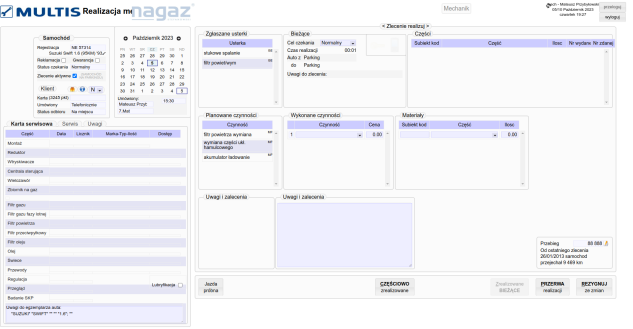
We built them a workshop management platform covering the whole of it: work scheduling across resources, order tracking with full financial settlement, parts management tied to orders, and legally compliant documents. It has been the backbone of their operations for over 13 years - growing to three times its original size along the way, without a major architectural rework.
Client Company Background
History & Evolution
Founded in 1993, Nagaz Stefanowski grew from a niche technical firm into one of the recognized names in its field, serving over 100,000 clients across nearly three decades - and expanding its operations continuously along the way.
Product Portfolio
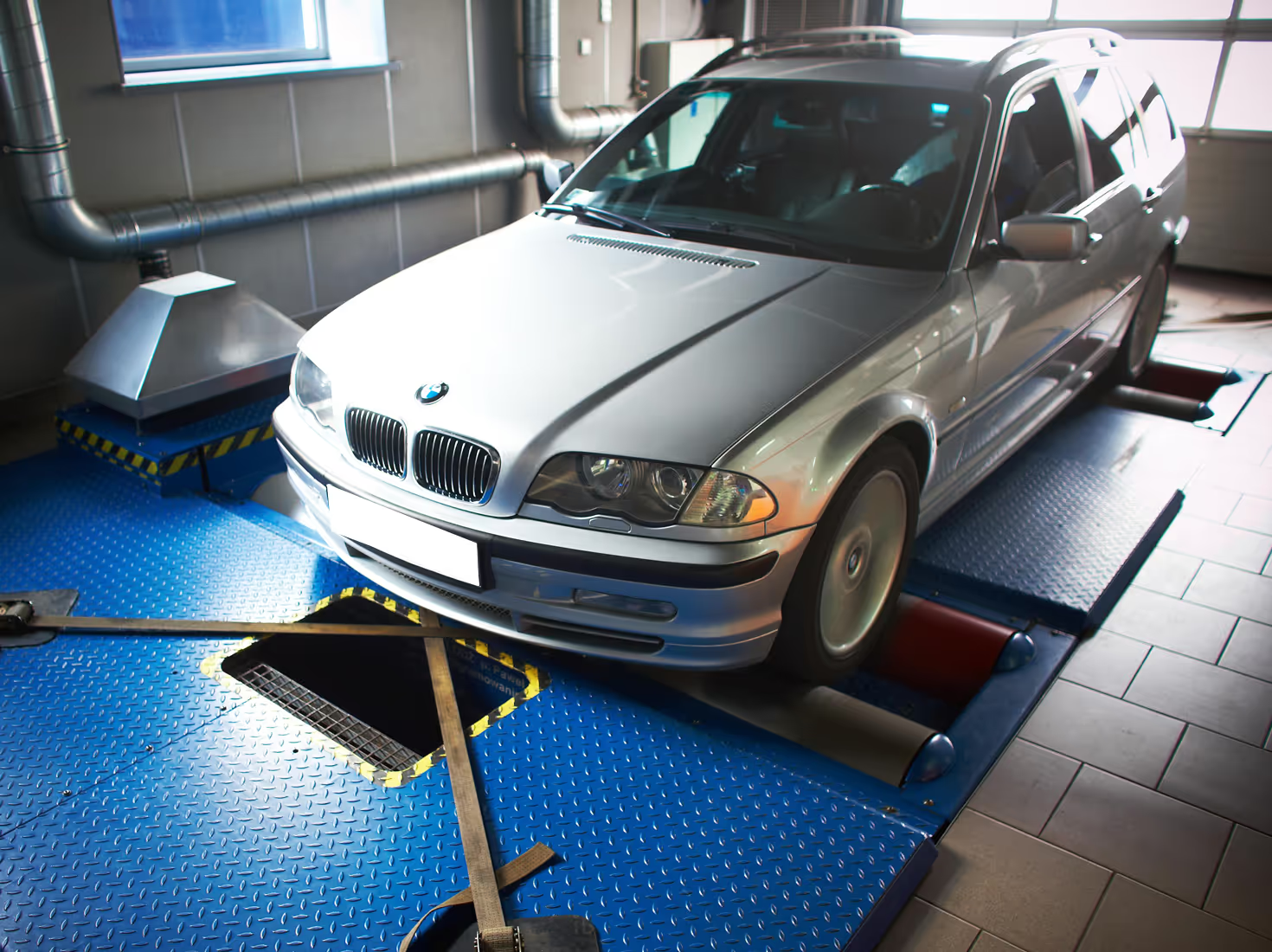
The core business is autogas system installation and maintenance, alongside general vehicle mechanics, advanced diagnostics, and car air conditioning repair. The facility includes a chassis dynamometer for precise calibrations and a certified vehicle inspection station; a wholesale parts operation and a specialized online store complete the ecosystem.
The Challenge
A workshop this diverse runs many kinds of work at once - installations, repairs, inspections, calibrations - each with its own steps, parts, and paperwork. The tools available for managing it didn't connect, and the gaps showed:

Fragmented Systems
Planning, execution, accounting, and the parts warehouse each lived in a separate system
Complex Work Scheduling
Sequences of related activities across different workstations were coordinated by hand
Inadequate Order Definition
No single place could hold everything a service order needed to carry
Inefficient Parts Management
Warehouse stock had no connection to the service orders consuming it
Lack of Progress Visibility
No live view of how far along each mechanic's work actually was
Assessment & Requirements

Unified Data Management
One central system holding the complete record of every order, vehicle, and client - the full history, in one place.

Flexible Order Workflows
Support for many order types, each with its own data requirements and its own path through the workshop.

Regulatory Compliance & Data Integrity
Legally compliant, homologated documents - with data that cannot be altered retroactively, by design.

Optimized User Interface
Interfaces built per role: office staff managing multiple clients at once see different screens than mechanics working at vehicles.
Solution Implemented
One workshop management platform, four core capabilities - built around how the operation actually runs:
Work Scheduling
Dynamic planning over time, across multiple resources - bays, equipment, people - so sequences of related activities
Order Management
Every order tracked end to end: client notes, planned and completed actions, replaced parts - with full financial settlement built from what was logged during the work, not reconstructed after it
System Integrations
Synchronization with external systems for automated data exchange - the same information entered once, flowing where it's needed
Advanced Analytics
An extensive statistics module: process times, workloads, and per-order economics - the numbers that show where you gain and where you lose
How It Lasted
Most business systems get rewritten every few years - a new framework, a new vendor, the same features rebuilt at full price. This one didn't.
The platform has run for over 13 years and has grown to roughly three times its original size - new order types, new modules, new integrations, all added to a live production system without a major architectural rework. It runs on-premise, on a server at the client's own facility.
The architecture is why. When regulations changed the required form of the homologation printout, we adapted the system in under a week - while other suppliers struggled with the same change for nearly a month. A system designed for change treats a decade of it as routine.
Results & Benefits
Increased Efficiency
Better planning across resources means more work through the same workshop - the gain came from sequencing, not from anyone working harder
Simplified Order Settlement
Parts and actions are logged as the work happens, so settling an order became a review instead of a reconstruction
Reduced Error Rate
Clearer processes and error-preventing design cut administrative and operational errors by a fifth